
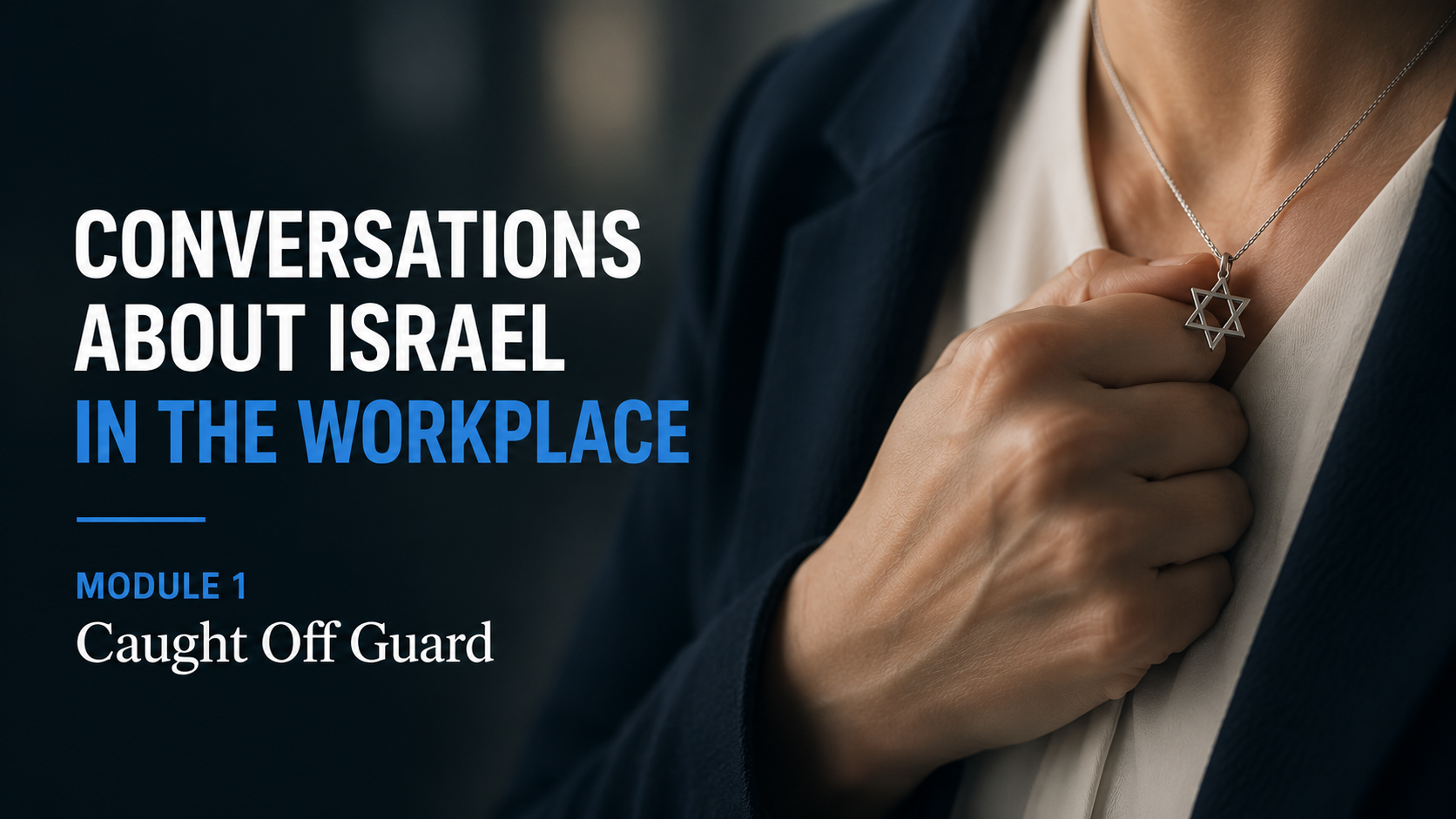
If you’ve ever walked away from a conversation at work wishing you’d said something differently, this course is for you.
Maybe it happened in a meeting. During lunch with colleagues. Or on a Teams chat.
Perhaps you didn’t say the wrong thing.
Perhaps you didn’t say anything at all.
Whatever happened, you’re not alone.
These conversations often catch us off guard.
Here’s a workplace moment you might recognise.
Let’s take a look.
What goes through your mind as you read this?
Why do these conversations feel so difficult?
Although everyone’s experience is different, two common barriers can make it harder to speak up with confidence.
Select each box to explore.
Lack of knowledge
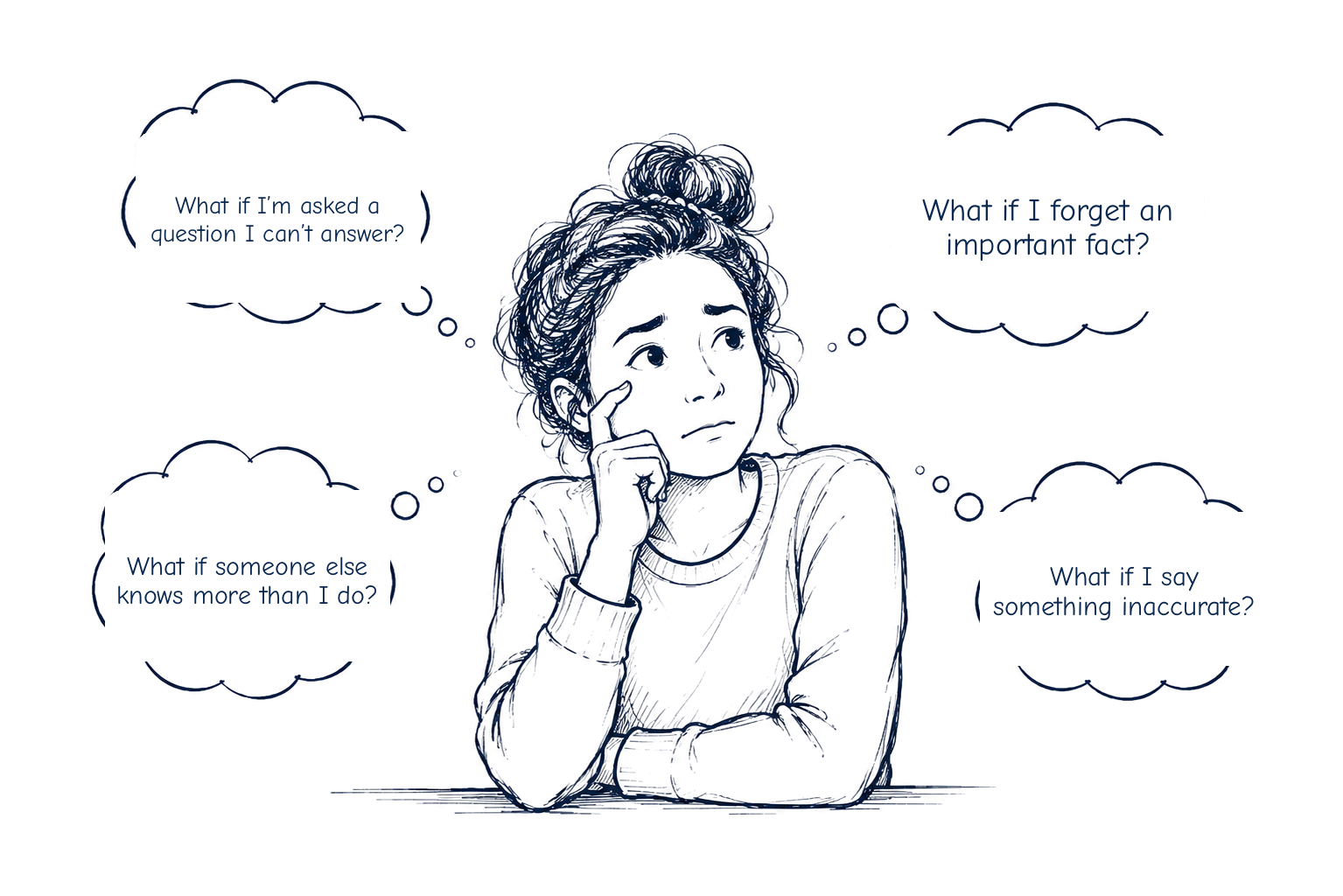
The real skill isn’t knowing everything
Many people believe confident conversations depend on knowing more facts.
But the people who handle these conversations well are not always the people who know the most.
They’re the people who know how to respond, rather than react.
That’s the skill you’ll begin learning in this course.
Fear of judgement
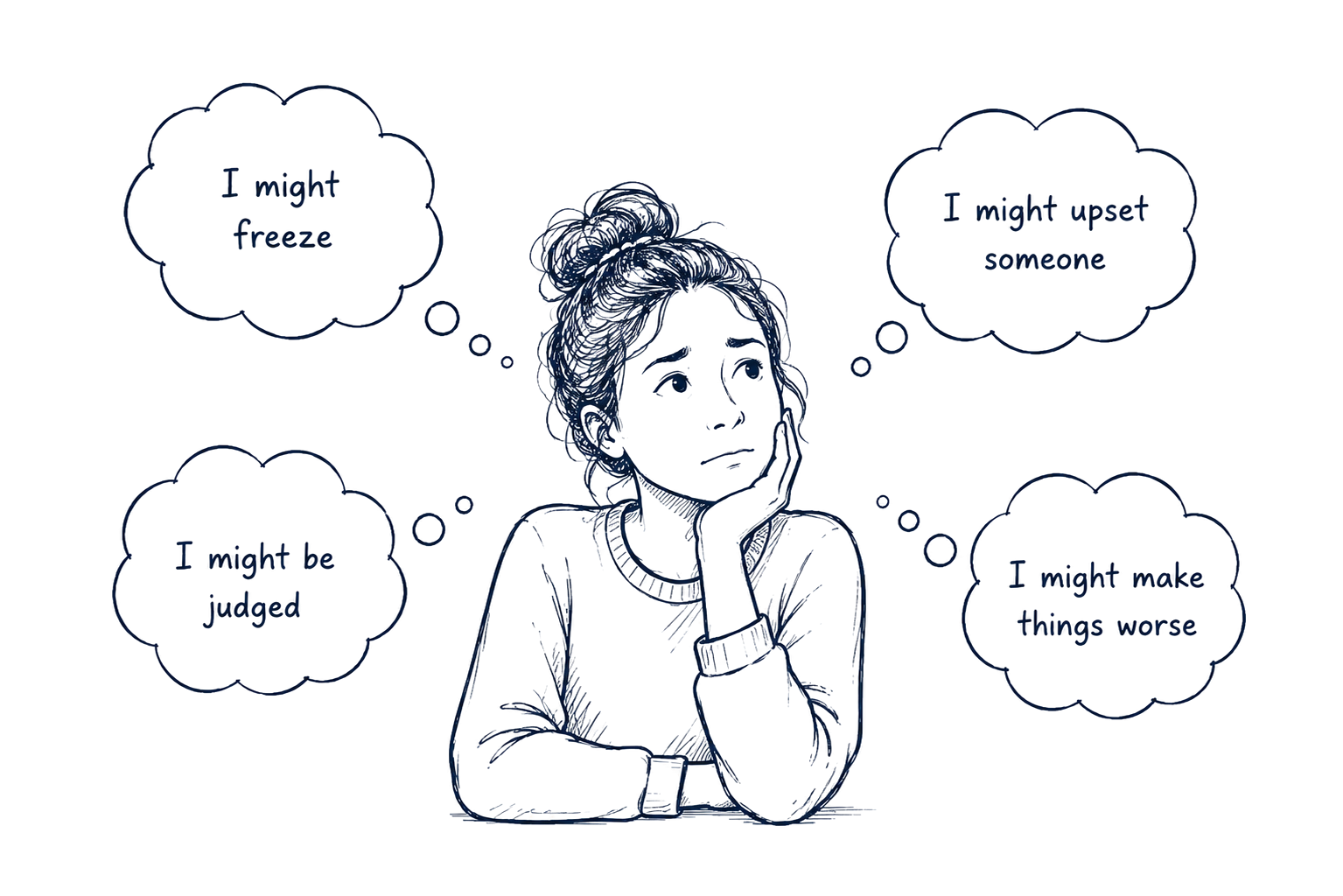
These concerns are real
You don’t control either of these.
But you do control how you respond.
That’s what this course will help you develop.
So how should you respond in the workplace?
There isn’t a perfect response. And you don’t need one.
What you need is a way to think clearly before deciding how to respond.





Did anyone see that boat that was trying to deliver aid to Gaza?
Yeah, I saw a TikTok about it last night. It looked like Israel just stopped humanitarian aid from getting through.
That’s what I saw too. I don’t know how anyone can defend that.
You've just walked into this conversation.
What are you thinking?
Respond. Don’t react.
A simple method for thinking clearly when you’re caught off guard.
Select each box to explore.
What’s actually happening here?
Before you respond, take a moment to work out what kind of conversation you’re actually having.
What am I trying to achieve?
Before choosing what to say, think about what matters to you in this conversation.
What’s the best way to respond?
Once you understand the situation and what you want from it, you can choose how to respond.
Respond. Don’t react.
Confidence doesn’t come from knowing everything.
It comes from knowing how to respond.

In Module 1, you discovered a different way to approach difficult conversations.
You don’t need to have all the answers.
Instead, you can learn to:
Over the next few modules, you’ll learn how.
Here’s another workplace moment.
It’s Monday morning.
You’re sitting with a few colleagues waiting for a meeting to start.
They’re talking about a television program that aired the night before.

 Sarah
Sarah Mark
Mark Emma
EmmaSarah: Did anyone watch that program about Gaza last night?
Mark: Yeah. Those images of starving children were awful.
Emma: I know. I don’t understand how anyone can see that and still support Israel.
Sarah: Neither do I.
What goes through your mind?
And then there’s the question of what you do.
You might want to say something.
You might prefer to leave it alone.
But what influences that choice?
Sometimes, fear of judgement gets involved.
If I say what I really think, will they see me differently?
That fear can influence what we do next, sometimes without us realising it.
When you’re worried about being judged, what might you do?
Explore each one.
What’s making the decision?
There may be good reasons to speak.
There may be good reasons to stay quiet.
The question is whether you’re making the choice, or whether fear of being judged is making it for you.
So what should guide your decision?
First, it helps to separate two things.
The same action can come from very different places.
“I don’t understand how anyone can see that and still support Israel.”
Imagine you decide not to say anything.
What might be the main reason behind that decision?
The behaviour can look exactly the same.
Two people might both stay quiet. But what’s driving that decision can be very different.
Select each box to explore.
The reason behind it isn’t the same.
And speaking up isn’t automatically confidence either.
You might speak because something matters to you and you want to say it.
Or you might speak because you feel you have to prove something, defend yourself or make sure people don’t get the wrong idea about you.
Speaking and staying quiet can both be deliberate. They can both be driven by fear.
Same situation. Same action. Different driver.
Click each action to see what might be driving it.
So how do you know what’s driving you?
Before deciding what to do, ask yourself:
Think about the meeting room again.
Imagine there was no risk of your colleagues judging you.
Would you still choose to stay quiet?
Now you’re getting closer to what matters to you.
If you’d make the same choice without the fear of judgement, that choice may genuinely reflect what you want.
If you’d choose differently, fear may be having more influence than you realised.
Finding your ground means noticing the difference.
Once you’ve looked at the fear, ask: what matters to me here?
You’re not deciding what to say yet.
You’re working out what you genuinely care about in this situation.
Select as many as you like.
More than one thing can matter.
And sometimes the things that matter to you pull in different directions.
That doesn’t mean there is a simple answer. It means there is a real decision to make.
You don’t need certainty. You need to understand what is influencing you.
Here’s what you’ve learned.
Finding your ground means understanding what’s driving you before deciding what to do.
Finding your ground doesn’t tell you what to say.
It gives you a clearer starting point. You still need to consider the situation, what you want to achieve and the possible consequences.
That’s where Pause. Assess. Respond. comes in.
Next, you’ll learn how to create enough space to make that choice instead of simply reacting.
✓ Module 2 complete
Find your ground.
Understand what’s driving you. Then choose deliberately.